2008–2010: Initial seasons

Rahul Dravid was the team’s icon player in 2008.
Ahead of the 2008 player auction, the IPL named Rahul Dravid as the icon player for the Bangalore franchise, which meant that Dravid would be paid 15% more than the highest bid player at the auction. The franchise acquired a number of Indian and international players at the auction such as Jacques Kallis, Anil Kumble, Zaheer Khan, Mark Boucher, Dale Steyn and Cameron White. They also signed up Ross Taylor, Misbah-ul-Haq and India under-19 World Cup winning captain Virat Kohli in the second round of auction. The team won only 4 of the 14 matches in the inaugural season, finishing seventh in the eight-team table. Only Dravid managed to score more than 300 runs in the tournament and they had to even bench their costliest foreign player Kallis for a few of the matches due to his poor form. The string of failures midway through the season led to the sacking of the CEO Charu Sharma, who was replaced with Brijesh Patel. Team owner Vijay Mallya went on to publicly criticize Dravid and Sharma for the players selected by them at the auction and stated that his “biggest mistake was to abstain from the selection of the team.” Eventually the chief cricketing officer Martin Crowe resigned.
At the 2009 player auction, the franchise signed up Kevin Pietersen for a record sum of US$1.55 million, making him the joint costliest player, along with fellow Englishman Andrew Flintoff who was signed up by the Chennai Super Kings for the same amount. They also traded Zaheer Khan for Robin Uthappa with the Mumbai Indians and also roped in local batsman Manish Pandey from them. Ahead of the tournament, which was shifted to South Africa due to the general elections, the Royal Challengers named Pietersen as the team captain for the season. Bangalore continued to struggle during the initial games of the 2009 season, winning only two of their first six games under the new captain. However, the team’s fortunes improved after Pietersen left for national duty and Kumble took over the captaincy, as the team went on to win six of their remaining eight league games to finish third on the points table. The team qualified for the semifinal where they faced the Super Kings. Electing to field first, Bangalore restricted their opponents to 146 and chased down the total with 5 wickets in hand, thanks to 48 and 44 by Pandey and Dravid respectively. In the final against Deccan Chargers, the Royal Challengers bowlers, led by Kumble’s 4 for 16, kept the Chargers down to 143/6. However, they struggled in the runchase, with only four batsmen reaching double figures, and lost the match by six runs in a tense finish.

Ross Taylor was one of the top performers for RCB in 2009 and 2010.
In 2010, the Royal Challengers continued under Kumble’s captaincy and finished the regular season with seven wins from 14 matches and 14 points. They were one of the four teams tied on 14 points with two semifinal spots at stake; they qualified for the semifinal as their net run rate was superior to those of the Delhi Daredevils and the Kolkata Knight Riders. In the semifinal, the Royal Challengers were defeated by the table-toppers Mumbai Indians by 35 runs. With a convincing nine-wicket win over defending champions Deccan Chargers in the third-place playoff, the Royal Challengers qualified for the 2010 Champions League Twenty20. Kumble retired at the conclusion of the Champions League, having led the team to the semifinals of both the IPL and the CLT20 that year.
2011–2017: Gayle-Kohli-de Villiers era
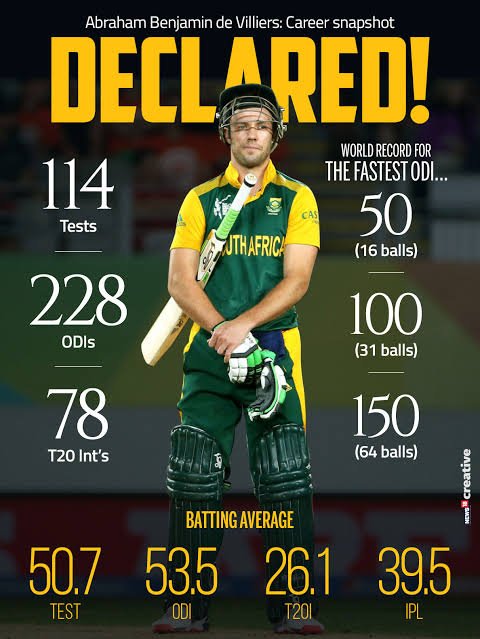
On 8 January 2011, IPL Governing Council held the auction for the season 4 of the league. The franchises had the option of retaining a maximum of four players for a sum of US$4.5 million. Royal Challengers however retained only one of their players, Virat Kohli, leaving the rest of the players back in the auction pool. When other IPL franchises let go the non-performers from each of their teams, RCB lost the top performers from the previous season by releasing them back to the auction pool. On Day-One of the auction, Bangalore bought Sri Lankan Tillakaratne Dilshan for $650,000, their former player and Mumbai Indians spearhead Zaheer Khan for $900,000, ace middle order batsman AB de Villiers for $1.1 million, former New Zealand skipper Daniel Vettori for $550,000, India’s new sensation, who played with Mumbai Indians until last season, Saurabh Tiwary for a whopping $1.6 million; Australia’s Dirk Nannes for $650,000 and India’s young talent Cheteshwar Pujara for $700,000. West Indian batsman Chris Gayle was brought in as a replacement for the injured Dirk Nannes in the middle of the tournament. Vettori led the side for the fourth season of the IPL.
RCB kicked off their campaign with a comfortable six-wicket win over the newly formed team, Kochi Tuskers Kerala. But then they suffered three big defeats at the hands of Mumbai Indians, Deccan Chargers and Chennai Super Kings. At this stage, speedster Dirk Nannes was ruled out of the tournament and RCB team management named West Indian opener Chris Gayle as his replacement. Gayle started off the tournament with a century (102* off 55 balls) against Kolkata Knight Riders, giving the Challengers an emphatic 9-wicket win. RCB also managed to beat Delhi Daredevils and Pune Warriors in their next two matches. They went on to beat Kings XI Punjab by a big margin of 85 runs, after Gayle smashed his second century of the tournament (107 off 49 balls). They won their next two matches against Kochi and Rajasthan Royals, both comprehensively by 9 wickets. They also defeated Kolkata in a rain-affected match at Bangalore. But then, Kings XI Punjab, riding on a blistering hundred by their skipper Adam Gilchrist, ended RCB’s 7-match winning streak, with a huge 111-run margin win. In their last league match, the Challengers beat the defending champions Chennai Super Kings by 8 wickets to end at the top of the points table. Chris Gayle shined once again with the bat, scoring an unbeaten 75 off 50 balls.
Royal Challengers faced Chennai Super Kings in the 1st qualifier at Mumbai. Virat Kohli scored an unbeaten 70 off just 44 balls to help RCB put up 175/4 in their 20 overs. Despite losing early wickets, Chennai went on to win the match by 6 wickets. The win took Chennai to the final and RCB faced Mumbai Indians in the 2nd qualifier in Chennai. Batting first, Royal Challengers made a massive 185/4 in 20 overs on a slow Chepauk track. Chris Gayle was the star once again for them as he scored a blistering 89 runs off 47 balls. Mumbai never looked in the hunt for a win as they collapsed to a 43-run defeat. The Royal Challengers qualified for the finals with this win and went on to face Chennai at their home ground in the finals. Winning the toss, Chennai elected to bat first in the finals. The Super Kings posted a huge total of 205/5. The Challengers did not bat well and lost the match by 58 runs. Chris Gayle was named Man of the Tournament and Bangalore set a new IPL record for the most successive wins by winning 7 matches on the trot.
Royal Challengers Bangalore qualified for the main event of the 2011 Champions League Twenty20 as they finished runners-up in the 2011 Indian Premier League, this made the Challengers the first and only team ever to play in all the three seasons of the tournament. The Challengers, placed in Group B in the first round of the tournament, kicked off their quest for glory with a last-ball defeat to the Warriors. They suffered a big 9-wicket defeat at the hands of IPL counterparts Kolkata Knight Riders in their second group match, leaving them with two must-win matches in order to qualify for the semi-finals. They registered their first win in the competition, in emphatic manner, by beating Somerset by 51 runs, thanks to Chris Gayle‘s 46-ball 86. The win also consolidated their poor net run-rate. In their last group match, they faced the champions from Australia, the Southern Redbacks. Batting first, the Redbacks rode on a century by Daniel Harris (108* from 61 balls) to set RCB a target of 215. The Royal Challengers came out with a spirited batting performance with Tillakaratne Dilshan and Virat Kohli scoring half-centuries. However, the Redbacks hampered the run-chase by picking up wickets at regular stages towards the end of the innings. With six runs required off the last ball to win the match, RCB found an unlikely-hero in Arun Karthik, who struck Daniel Christian for a six over deep mid-wicket, to take RCB through to the semi-finals. The Challengers, despite being level on points with Kolkata Knight Riders and Warriors, qualified for the semis on the basis of having a better net run-rate than the two teams.
The Royal Challengers played the New South Wales Blues in the semi-finals of the tournament. Winning the toss, Daniel Vettori put the Blues in to bat and the decision seemed to backfire as the Blues amassed 203/2 in 20 overs, mainly due to the efforts of David Warner who struck an unbeaten 123 off just 68 balls. Despite losing Dilshan early in the chase, RCB got off to a rollicking start with Chris Gayle smashing 92 runs from only 41 deliveries. He was ably supported by Kohli, who struck an unbeaten 84 from 49 balls to give RCB a comfortable 6-wicket victory with 9 balls to spare. They took on an injury-hit Mumbai Indians in the final at Chennai. Mumbai won the toss, chose to bat and put up a modest total of 139 in 20 overs. After getting off to a blistering start with the bat, the Challengers lost wickets at regular intervals before getting bundled out for 108 in 19.2 overs, falling short of the target by 31 runs. Mumbai skipper Harbhajan Singh was awarded the Man of the Match for picking 3/20 in his four overs.
In the pre-season transfer window Royal Challengers Bangalore transferred Australian all rounder Andrew McDonald from Delhi Daredevils. RCB paid US$100,000 as transferred fees. Royal Challengers Bangalore also retained Chris Gayle for the next two IPL seasons.
Before the auction RCB had got Andrew McDonald transferred from Delhi Daredevils. They had also bought out the contracts of Johan Van der Wath, Jonathan Vandiar and Nuwan Pradeep. In the auction RCB bought only Vinay Kumar for $1 million and Muttiah Muralitharan for $220,200.
Royal Challengers Bangalore began the 2012 IPL without the services of talisman Chris Gayle who had arrived in India, carrying a groin injury he had sustained in the preceding Bangladesh Premier League. Sreenath Aravind, RCB’s most successful bowler in 2011 too was laid low by injury and Harshal Patel emerged as the preferred third seamer in the side ahead of Abhimanyu Mithun. AB de Villiers and Muttiah Muralitharan gave the team a winning start against Delhi but 3 consecutive losses followed. One of them saw the team concede a 200+ total off the last ball in Chennai while Ajinkya Rahane’s ton at Bangalore included 6 fours in a single over from Aravind. The team rallied back, Chris Gayle finding his touch to hit 5 consecutive sixes off Rahul Sharma and Saurabh Tiwary hitting a six off the last ball to win the team a tight chase against Pune. Gayle shone again at Mohali in a comprehensive win while de Villiers, Tillakaratne Dilshan and KP Appanna engineered another win in Jaipur. A washed out match at Bangalore against Chennai denied the team a chance at gaining 2 points outright, the teams sharing points 1-1 each. Two subsequent losses put RCB in competition with Rajasthan Royals, Chennai Super Kings and Kings XI Punjab for the last play-offs slot. Daniel Vettori benched himself so the team could play Muttiah Muralitharan as one of the four foreigners allowed in the playing XI, Virat Kohli taking up captaincy duties. The team signed Prasanth Parameswaran who played for Kochi Tuskers Kerala in the 2011 IPL as a replacement for the injured Sreenath Aravind. A spectacular chase against Deccan Chargers at Bangalore and two routs in Mumbai and Pune put the team back on track for a place in the play-offs. RCB went down to Mumbai in a hard-fought match at Bangalore but bounced back in Delhi as Chris Gayle became the first man to hit 3 centuries in the IPL, hitting 128* at Delhi.
Other results in the tournament now placed RCB in direct competition with Chennai for the final play-offs slot. The teams were tied on points with Chennai ahead on Net Run Rate but RCB had a game in hand while Chennai had played out their games. A batting failure at Hyderabad in RCB’s final game of the season led to the end of the team’s 2012 campaign, making it the first time since 2009 that they failed to qualify for both the play-offs and the Champions League. Chris Gayle was the highest run scorer of the tournament for the second year in a row, scoring 733 runs at 61.08 with 7 fifties, 1 hundred and a strike rate of 160.74. Vinay Kumar finished as the 5th highest wicket taker of the tournament with his 19 wickets from 17 matches.
Before the auction RCB released Mohammad Kaif, Charl Langeveldt, Dirk Nannes, Luke Pomersbach and Rilee Rossouw. At the auction RCB bought Christopher Barnwell, Daniel Christian, Moisés Henriques, Ravi Rampaul, Pankaj Singh, R. P. Singh and Jaydev Unadkat. RCB kicked off their campaign by winning their first 6 home games starting with a 2 run win over Mumbai Indians where Chris Gayle scored 92* off 58 balls and Vinay Kumar picking up 3 wickets. But they suffered a super-over defeat to newly formed Sunrisers Hyderabad but then they beat the same opponents convincingly by 6 wickets where Virat Kohli smashed a brilliant 93*. They also beat Kolkata Knight Riders by 8 wickets. Gayle and Kohli were in tremendous form with the bat while Vinay Kumar was the hero with ball. RCB suffered a shock in the next match against Chennai Super Kings where R.P. Singh conceded a no-ball of the last ball of the match which was a catch. However, the team rallied back to win their next 3 games. One of the matches against Pune Warriors India saw Chris Gayle smash 175 off just 66 balls which was the highest individual score in T20 cricket and RCB put up 263-5 which was the highest total in T20 cricket. Pune never fought back in the chase and eventually lost the match by 130 runs. People often nickname Bangalore as “Ban-gayle-ore”. However, the team began to lose matches away from home. One of the matches against Punjab saw David Miller score 101 off just 38 balls to guide Punjab to an unlikely victory. RCB only managed to beat Pune Warriors India and Delhi Daredevils away from home. They were now in direct competition with Sunrisers Hyderabad with 16 points from 13 matches who were also with 16 points from 13 matches. A batting failure against Kolkata and a poor fielding and bowling performance against Punjab at Bangalore left RCB in a do or die situation in their last league match against Chennai Super Kings at Bangalore. Fortunately, RCB registered a stunning win in their last match which was affected by rain. Now, RCB could only qualify for playoffs if Kolkata would beat Hyderabad. Unfortunately, Sunrisers Hyderabad won the match convincingly by 5 wickets which ended RCB’s 2013 campaign. Chris Gayle was the leading run scorer for the team, scoring 708 runs and Vinay Kumar was the leading wicket taker by taking 22 wickets.
Virat Kohli was named the captain of RCB team. Before the auction, AB de Villiers, Chris Gayle and Virat Kohli were retained from the previous seasons. The players bought in the 2014 auctions were Albie Morkel, Mitchell Starc, Ravi Rampaul, Parthiv Patel, Ashok Dinda, Muttiah Muralitharan, Nic Maddinson, Harshal Patel, Varun Aaron, Vijay Zol and Yuvraj Singh who was the most expensive player fetching a massive 14 crore. They ended up 7th in the points table and didn’t qualify for the playoffs.
RCB retained Virat Kohli, AB de Villiers, Chris Gayle, Mitchell Starc, Ashok Dinda, Varun Aaron, Harshal Patel, Yuzvendra Chahal, Nic Maddinson, Rilee Rossouw, Abu Nechim, Yogesh Takawale, Vijay Zol and Sandeep Warrier for the 2015 Indian Premier League. They also bought Manvinder Bisla and Iqbal Abdulla from Kolkata Knight Riders and Mandeep Singh from Kings XI Punjab during the Transfer Window. They bought Darren Sammy, David Wiese, Adam Milne, Sean Abbott, Subramaniam Badrinath, Jalaj Saxena, Sarfaraz Khan and Dinesh Karthik for ₹10.5 crore (US$1.5 million) from the 2015 Player Auctions.
Royal Challengers Bangalore started their season with an unconvincing win against KKR at Kolkata, supported by a knock of 96 by Chris Gayle. But they lost their next three matches in Bangalore to SRH, MI, and CSK. Two great bowling performances ensured RCB secured dominant wins against RR and DD, winning by 9 wickets and 10 wickets respectively. Their next match against RR got washed out after a strong batting performance from RCB. They lost a close match to CSK, but recovered by crushing Kings XI Punjab by 138 runs, supported by a century by Chris Gayle, and a four wicket haul for Sreenath Aravind and Mitchell Starc. Royal Challengers’ good form continued when AB de Villiers and Virat Kohli smashed the highest T20 partnership ever (later beaten by the same pair in IPL 2016) against Mumbai Indians, to secure a good win. Later, RCB lost to Kings XI Punjab in a rain affected match, putting their playoff qualification in doubt. They faced SRH in the next match, again affected by rain. Amidst a lot of drama, and stunning performances from Virat Kohli and Gayle, RCB won an unlikely match in Hyderabad. Now, the only way they could be out of the playoffs became very unlikely, yet possible. RCB lost their chance to be placed second in the points table after rain washed out their final match against DD.
They ended the league stage at the third position, with 7 wins from 14 matches. On 20 May, they faced the Rajasthan Royals in the Eliminator and earned a spot in Qualifier 2. However, they lost to the Chennai Super Kings in the Qualifier 2, and ended the season finishing third. AB de Villiers, Virat Kohli, and Chris Gayle, ended by being the 4th, 5th, and 6th highest run scorers of the season respectively, while Yuzvendra Chahal was RCB’s highest wicket taker, being the 3rd highest in the season.

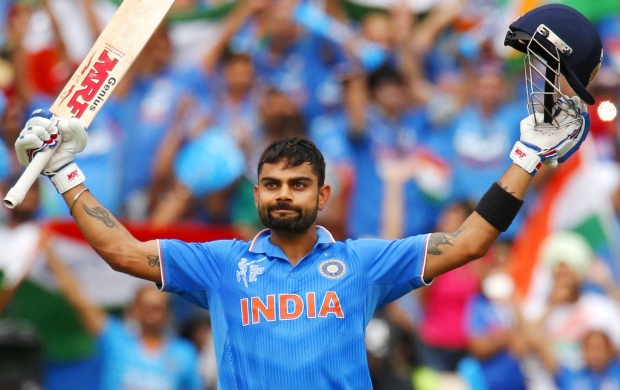
Virat Kohli set the record for most runs (973) in an IPL season in 2016.
In light of financial scandals involving owner/chairman Vijay Mallya, Amrit Thomas became the chairman of the Royal Challengers. RCB changed the team logo and also became the first team in IPL to adopt different jerseys for home and away matches. Virat Kohli, AB de Villiers, Chris Gayle, Mitchell Starc, David Wiese, Adam Milne, Varun Aaron, Mandeep Singh, Harshal Patel, Kedar Jadhav, Sarfaraz Khan, Sreenath Aravind, Yuzvendra Chahal, and Abu Nechim were retained by RCB for the 2016 Indian Premier League. From player auctions, they bought Shane Watson for ₹9.5 crore (US$1.3 million), Kane Richardson and Stuart Binny for ₹2 crore each, and Travis Head and Samuel Badree for ₹50 lakhs each. Other players that joined the team were Sachin Baby, Iqbal Abdulla, Praveen Dubey, Akshay Karnewar, Vikramjeet Malik and Vikas Tokas. KL Rahul and Parvez Rasool also joined RCB for the IPL 2016 edition.
Royal Challengers Bangalore started their season with a blitz from AB de Villiers and Virat Kohli against SRH at Bangalore, to comfortably win their first match. A bludgeoning century from Quinton de Kock meant RCB lost their second match of the season. Their form deteriorated in the coming matches, winning only one match of the next five. Although, Virat Kohli and AB de Villier’s brilliant form, along with the emergence of KL Rahul as an important member of RCB’s batting, were positive points. Royal Challengers needed to win at least 6 of their next seven matches to have a chance at qualifying for the playoffs. They won matches against KXIP and Rising Pune Supergiant, the new entrant in the tournament. But a loss against Mumbai Indians meant they needed 4 wins in 4 matches to qualify. Since then, Virat Kohli found himself in sublime form, with captaincy and the bat. RCB most notably defeated the Gujarat Lions by 144 runs, the highest margin in IPL history, during this 4 match winning streak. Through other match results, RCB ended at an unlikely second position at the end of the league stage. Virat Kohli dominated the run-scoring list, while Shane Watson and Yuzvendra Chahal collectively topped the wicket taking list at the end of the league stage. They faced the Gujarat Lions in the Qualifier 1 at their home ground, the M. Chinnaswamy Stadium. They won by 4 wickets to make it to their third final in nine seasons. They played the final against SRH, again in Bangalore. RCB lost a hard-fought match by 8 runs, to end as runners up in this ninth season of the IPL. This is the third instance of RCB losing the finals in the IPL.
Yuzvendra Chahal and Shane Watson ended second and third respectively on the list for most wickets.
At the launch event of his biography, ‘Driven: The Virat Kohli Story’ in New Delhi, in October 2016, Kohli announced that RCB would be his permanent IPL franchise that he would play for.
Virat Kohli, AB de Villiers, Chris Gayle, Mitchell Starc, Adam Milne, Mandeep Singh, Harshal Patel, Kedar Jadhav, Sarfaraz Khan, Sreenath Aravind, Yuzvendra Chahal, Shane Watson, Stuart Binny, Travis Head, Samuel Badree, Sachin Baby, Iqbal Abdulla, Praveen Dubey and KL Rahul were retained by RCB for the 2017 Indian Premier League. From player auctions, they bought Tymal Mills for ₹12 crore (US$1.7 million), Aniket Chaudhary for ₹2 crores, Pawan Negi for ₹1 crore and Billy Stanlake for ₹30 lakhs. Mitchell Starc dropped out of the season to prepare for the Champions Trophy which led to the management to replace him with Tymal Mills. The team was the worst hit with injuries as their captain Virat Kohli and AB de Villiers did not play for the initial matches which led to the making of Shane Watson as the interim captain. Even their star players KL Rahul and Sarfaraz Khan were ruled out of the season due to their prolonged injuries.
They lost their first match of the season as they were bundled out by 172 and lost by 35 runs to Sunrisers Hyderabad in Hyderabad. But they won their second match against Delhi Daredevils in their home ground. However, they lost the next three matches in a row against Kings XI Punjab, Mumbai Indians and Rising Pune Supergiant respectively. Though AB de Villiers made a quick fire 89 off 46 balls, RCB lost the match against Kings XI Punjab as the other players made 57 dot balls. The match against Mumbai Indians saw Virat Kohli’s comeback with a quick 62 off 47 balls and Samuel Badree becoming the 14th player in the IPL history to claim a hat-trick, but they lost the match as Pollard made 70 off 47 balls to win the match for them. They lost the match against Rising Pune Supergiant by a massive 27 runs. But in their next game against Gujarat Lions, they won by 20 runs and coincidentally Chris Gayle became the first player to score 10,000 runs in T20s. However, in their next game against Kolkata Knight Riders, on the day when RCB made 263/5 against Pune Warriors India which was the highest IPL score in 2013, they were bundled out for 49 all out which is the lowest IPL score and also where no batsman could score 10 runs. They kept losing matches consecutively as they could not make high scores and their big guns- Chris Gayle, Virat Kohli and AB de Villiers failing repeatedly. The pitch in M. Chinnaswamy Stadium was changed from a usual batting to the bowling pitch which made the batsman struggle for runs. They ended up at the bottom of the table and they changed their squad for each match which was the reason for its downfall. However, they finished their miserable season on a high note after winning against Delhi Daredevils by 10 runs in Delhi. They made low scores like 49 all out against Kolkata Knight Riders, 96/9 against Rising Pune Supergiant and 119 all out against Kings XI Punjab.
2019 IPL
Ahead of the 2019 IPL, Royal Challengers Bangalore spent ₹16.4 crores (2.4 million US$) to buy nine players- Shivam Dube, Shimron Hetmyer, Akshdeep Nath, Prayas Barman, Himmat Singh, Gurkeerat Singh Mann, Heinrich Klaasen, Devdutt Padikkal and Milind Kumar. In-between the tournament, one of the best fast bowlers in the game Dale Steyn joined the squad and was crucial for the team’s victories. Unfortunately for RCB he was ruled out of the tournament after playing 3 matches due to a shoulder injury. Despite their hard efforts, RCB failed yet again to deliver in the group-stages. Out of the 14 games played, they won five, lost eight and tied one. Consequently, they ended at the bottom of the points table for the second time (previously in 2017).
A lot of eyes were laid on the Captain of the team Virat Kohli because he was to lead his country in the upcoming Cricket World Cup, this put a lot of pressure on the captain. In spite of this pressure, Kohli scored a total of 464 runs which included one match winning century and two half centuries making him the second player to reach the milestone of 5000 runs in the IPL after Chennai Super Kings’ All-rounder Suresh Raina.
Even with RCB’s disappointing performance in the season, most of their matches were close encounters and their fans were thoroughly entertained. At the end of the 12th season of the IPL franchise, RCB still remains among the three original teams of the franchise (the other two include Kings XI Punjab and Delhi Capitals) who haven’t won the IPL trophy yet.
2020 IPL
Before the start of 2020 IPL, RCB has released their players: Akshdeep Nath, Colin de Grandhomme, Dale Steyn, Heinrich Klassen, Himmat Singh, Kulwant Khejroliya, Marcus Stoinis, Milind Kumar, Nathan Coulter-Nile, Prayas Ray Barman, Shimron Hetmyer, Tim Southee. During the IPL auction, they added Aaron Finch (4.4 crore), Chris Morris (10 crore), Joshua Philippe (20 lakh), Kane Richardson (4 crore), Pavan Deshpande (20 lakh), Dale Steyn (2 crore), Shahbaz Ahamad (20 lakh), Isuru Udana (50 lakh).
Seasons
| Year | Indian Premier League | Champions League Twenty20 |
| 2008 | League stage (7th/8) | Cancelled |
| 2009 | Runners-up | League stage |
| 2010 | Playoffs (3rd/8) | Semifinalists |
| 2011 | Runners-up | Runners-up |
| 2012 | League stage (5th/9) | DNQ |
| 2013 | ||
| 2014 | League stage (7th/8) | |
| 2015 | Playoffs (3rd/8) | Defunct |
| Year | Indian Premier League | |
| 2016 | Runners-up | |
| 2017 | League stage (8th/8) | |
| 2018 | League Stage (6th/8) | |
| 2019 | League Stage (8th/8) |

 Digital Age Cricket